5 Secrets to Passing your NASM Certified Personal Trainer Exam
Master Postural Imbalances and the Overhead Squat Assessment – This Alone Could Be Worth 10+ Questions
This is not optional. The Overhead Squat Assessment (OHSA) is one of the most heavily tested concepts on the entire NASM exam, and if you walk in without a rock-solid understanding of it, you are leaving points on the table. Drill the three major Postural Distortion Patterns until they are second nature: Upper Crossed Syndrome, Lower Crossed Syndrome, and Pronation Distortion Syndrome. For each one, you need to know exactly which muscles are overactive (tight, facilitated) and which are underactive (weak, inhibited). Don’t just memorize the names – visualize the movement compensations. If someone’s knees cave inward during a squat, what does that tell you? Know it’s cold. This topic alone can be the difference between passing and retaking.
Know Your Stages of Training – 8+ Questions Depend on It
The NASM OPT Model is the backbone of everything, and the exam will absolutely test whether you can match exercises to the correct training stage: Stabilization, Strength, or Power. You need to be able to look at any exercise and immediately know where it lives in the model. Here’s a simple rule that will save you on multiple questions: if the exercise involves a stability ball, it belongs in the Stabilization stage – full stop. Build out from there. Go through every exercise in your textbook and categorize it. Make flashcards. Quiz yourself relentlessly. With 8 or more questions tied directly to this concept, there is no reason to give those points away.
Don’t Lose Sleep Over Muscle Actions – But Know Your Gastrocnemius
Here’s a truth most NASM candidates don’t hear until it’s too late: muscle actions only account for roughly 2 questions on the exam. Yes, understanding which muscles perform which joint movements is critical for your career as a trainer – but for the purposes of passing this test, it is not where your precious study hours should go. Redirect that time toward the muscle imbalance chart, which carries far more weight on the exam. That said – and pay attention here – make sure you know what the gastrocnemius does. Trust the wink on that one.
Don’t Let the Science Chapters Swallow Your Study Time
The Nervous System. The Muscular and Skeletal Systems. The Endocrine System. The Cardiorespiratory System. The Digestive System. These chapters are dense, intimidating, and packed with scientific detail that can make even the most motivated candidate feel overwhelmed. Here’s the reality check you need: combined, these chapters account for only 3.2% of exam questions. That’s it. Get a general working understanding so you’re not completely lost if one pops up, but do not let these chapters consume your study schedule. Your time is better spent on assessment, program design, and the OPT model – areas that will show up again and again on test day.
Nail the Acute Variables – They Show Up Everywhere
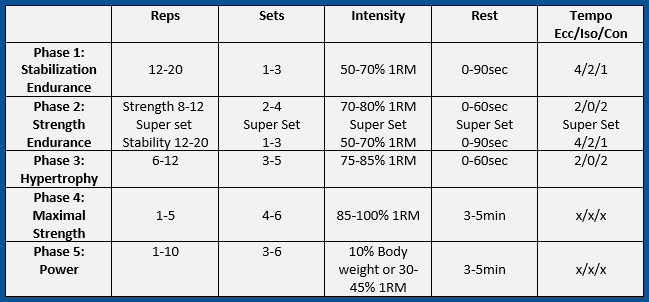
If there is one concept that quietly threads its way through almost every section of the NASM exam, it is the acute variables of training. Sets, reps, intensity, tempo, rest intervals, training frequency – these are not just background details. They are the engine behind the entire OPT Model, and the exam will test you on them repeatedly and in ways you might not expect.
Here is what most candidates get wrong: they memorize the numbers without understanding the why behind them. Don’t make that mistake. When you know that a Stabilization Endurance phase calls for 1–3 sets of 12–20 reps at a slow tempo with short rest periods, you should also understand that this is designed to improve neuromuscular efficiency and joint stability – not just maximize load. That context is what helps you answer application-based questions when the exam tries to trick you with a scenario.
Go through each phase of the OPT Model – Stabilization Endurance, Strength Endurance, Hypertrophy, Maximal Strength, and Power – and lock in the acute variables for each one. Build a comparison chart if you have to. Know what changes between phases and, more importantly, know why those changes are made. The exam loves to give you a client scenario and ask you to select the appropriate program design – and if your acute variables are sharp, those questions become some of the easiest points you will earn all day.